Tuesday, 25 February 2014

Book 6 review: ‘Stories I Only Tell My Friends’, Rob Lowe


My 6th book of this year is Rob Lowe’s autobiography, ‘Stories I Only Tell My Friends’. To put it simply, this is autobiography is a great book. It was well written, insightful and funny, and just generally a good read. I had only ever seen Rob Lowe in the new TV series Parks and Recreation (in which he was brilliant) and had never seen any of his movies. So I was coming into this book cold, knowing little about Rob Lowe, and not expecting a great deal. Now Rob Lowe now has a new fan, not only of his acting, but as a writer.
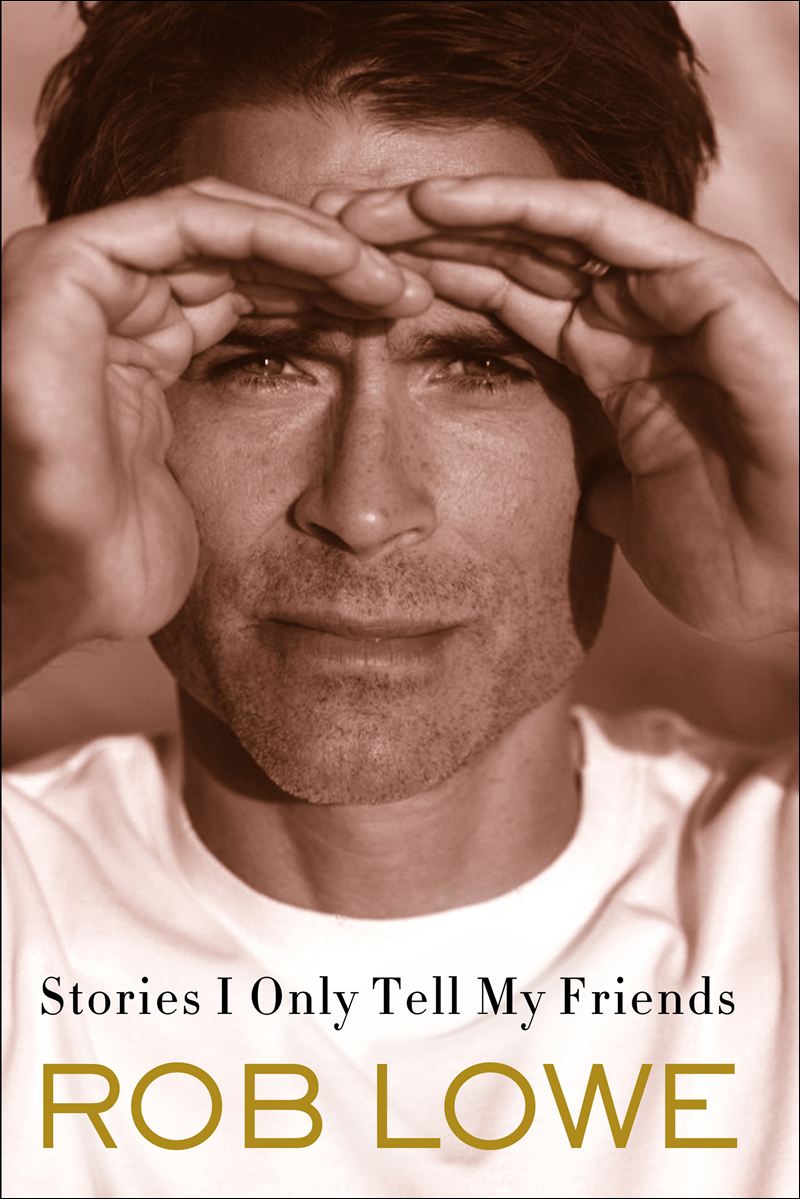
 
The Cover of Rob Lowe's 'Stories I Only Tell My Friends'


‘Stories I Only Tell My Friends’ follows Rob's life as a young, wanna-be actor growing up in Ohio. then moving with his mother, step-father and brothers to Malibu in the 1970’s. Rob’s descriptions of Malibu in the 70’s before it became an expensive celebrity haven, are fascinating. In the audition circuit, and in his new hometown of Malibu Rob comes across so many of his fellow future stars; Tom Cruise, Robert Downey Jr, Emilio Estevez, Charlie Sheen, Sean Penn amongst many, many others. Rob then details his early struggles as an actor and his difficulty with the disconnect an actor has from the finished product of a movie.

 I know little of Rob Lowe’s work. I vaguely remember seeing him in Brothers and Sisters when I was a teenager, and absolutely love him in Parks and Recreation but have not seen any of his movies. I did not grow up with Rob Lowe as the 20-something A-list celebrity so knew little of the rumours that have surrounded his life since he was a teenager.
 
Back in his teenage years Rob was melting hearts with this grin...
 
When I mentioned I was reading his book to a colleague, she simply mumbled something about drugs and celebrities. But apart from that comment, Rob Lowe’s reputation did not precede him as I read his autobiography.


the so called ‘Brat Pack’ of the 80's 

Sure this autobiography goes into Rob’s struggles with alcohol and his multiple love affairs with every girl from Princess Stephanie of Monaco, to Cary Grant’s daughter Jennifer Grant. But Rob’s insight into the film industry and into his varied career is the real star of this book. 
 
What is astonishing is how Lowe discovers that Hollywood is all about missed opportunities. It is so hard to predict how a movie will turn out once a writer, director, producer and ultimately a studio have had their way with it, and often an actor can give an incredible performance that is either cut from a film, or edited in such a way that ruins it. Rob speaks about how he was so excited to watch a screening of his first movie, the iconic 'The Outsiders' but was devastated when he realised half his scenes had been cut. Lowe talks about questioning whether to take the opportunity to be the leading man in 'Dune' and mentions how Tom Cruise  was cast in Risky Business, a movie he wasn't sure would be successful.  

The most obvious sign of how much I liked this book is the fact I have been on a Rob Lowe cinematography binge for the last week since reading 'Stories I Only Tell My Friends'. I have begun watching The West Wing, I have the Outsiders, St Elmo's Fire and About Last Night waiting for me to watch this weekend. It is great when a book can introduce you to something new, and Lowe has successfully introduced me to some of the greatest films of the 80's, and to a brilliant TV show that many had previously tried and failed to get me to watch (I have a Political Science degree so there were plenty of people who tried).
 
 
The Good Bits

The most surprising part of this autobiography was how well it was written. Rob Lowe was funny, self-deprecating and above all, interesting. At no point  was I bored or uninterested. He is a great storyteller.

As I mentioned, 'Stories I Only Tell My Friends’ has inspired me to watch The West Wing for the first time. And I cannot believe how I got through my degree in political science without watching The West Wing, so thank you Mr Lowe for introducing me to this absolute gem. The West Wing holds a special place in Lowe's heart and he speaks of his absolute love of the show. Indeed, Rob starts his book describing John Kennedy Jr.'s support for the West Wing just before his tragic death and the shaky beginnings of the show. He then jumps back to his childhood, throughout his early years of fame, his breakdown and then finishes the book with his rebirth as an actor with the West Wing.
 
and it all comes together like this...

Ultimately, I am very grateful that this book certainly does not fit with the history of celebrity autobiographies being truly terrible.
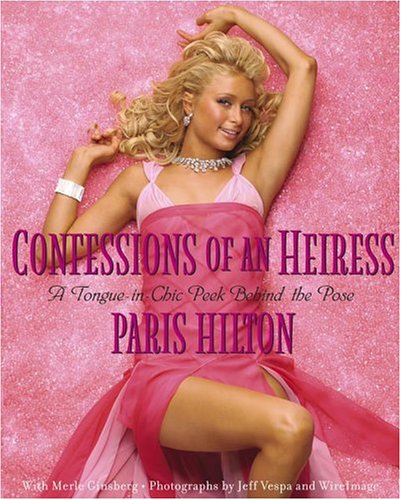


Paris Hilton’s biography- straight to the bargain book bin with this one


David Hasselhoff’s autobiography 'Making Waves' comes in a close second for worst celebrity autobiography ever


The Not So Good Bits
I am struggling to find one thing that I didn't like about this book. It is not necessarily a book that will truly challenge you, or change your life, but it will offer new insight into the reality of life as a 'star', the difficulties of pursuing, and staying true your artistic passion, and may even make you a fan of Rob Lowe.



Rating
4 out of 5 stars
 

The Next Book
The book of the moment, Gone Girl by Gillian Flynn. I was meant to read that before this novel but I decided to read Rob Lowe's book first.


Tuesday, 11 February 2014

Book 5 review: A Concise Chinese-English Dictionary for Lovers, Xiaolu Guo

My 5th book out of 52 books this year was the quirky and endearing novel, ‘A Concise Chinese-English Dictionary for Lovers’ by Xiaolu Guo. Unlike the last novel I reviewed (The Goldfinch) this speedy little book took me one day to finish, not a week and a half. ‘A Concise Chinese-English Dictionary for Lovers’  follows Zhuang “Z” as she is sent to London by her parents to study English. The year that follows is a year of discovery and awakening for Zhuang, as she studies English, life and love. It is a very sweet, charming and beautifully written novel, easy to review and well worth a read. 

The beautiful cover for Xiaolu Guo’s ‘A Concise Chinese-English Dictionary for Lovers’


Guo’s novel is written from the point of view of 23 year old Zhuang, or Z as she first arrives in London with a very limited grasp of English, and a great sense of disconnect and loneliness as she leaves her native China and her family for the first time. 

The language used in the novel is very sweet. The novel starts with short, almost apologetic sentences as Z narrates her life with her limited vocabulary.


There are two or three pages in the novel simply in Cantonese, with an editor’s translation on the reverse of the page. In these pages the sense of frustration that Zhuang feels is palpable as she struggles to convey her thoughts in a foreign language and world. 
As the novel progresses Zhuang’s grasp of English improves, but she still continues to struggle to grasp the nuances of English culture and its many differences from the familiarity of her Chinese homeland. There are many unique and amusing phrases in this novel as Zhuang finds a way to describe everyday objects she doesn't yet know the words for in English or that have an interesting translation in Chinese. 


In a shocking development, something I learnt at university resonated with me when reading this novel, meaning my university degree can actually be applied to real life.


woah

While reading this novel I was reminded of the concept of intersectionality. I know it sounds like a made up word (even Microsoft spell check doesn't recognise it) but bear with me. Intersectionality is the concept that all challenges and oppressions faced by individuals are interlinked. An individual’s life is informed by many different factors; their gender, their race, their language, their age, and not one of these factors can be separated out.

Drawing by yours truly

Zhuang’s experiences are not solely informed by her language and her struggles to understand and to be understood in English. Her life- and the novel- is about many more subtle challenges than that. Zhuang also embarks on a journey of sexual self-discovery and love with an older man, as she discovers her understanding of sexuality is inherently tied to her culture and upbringing in China, as well as her youth and naivete . She also struggles with the reality of cross cultural relationships, with her language school classmates and with her lover. 

The novel is full of observations on cultural norms. Zhuang discovers that although in many respects Western Culture appears more open than Chinese culture with more nudity and sexuality in the media, in other respects, the British can be closed and prudish. Especially when it comes to farting, frowned upon in the West but not so in China. 


Ultimately this novel by Guo is a beautiful account of love, life and language. Anyone who has ever struggled with a foreign language can relate to Zhuang's struggle to understand and to be understood. The novel is also a story of sexual awakening and expression, and includes some of the most beautifully written accounts of love I have ever read. This beats your average chick-flick novel any day. So next time you are after a short, quick and lovely novel to read pick ‘A Concise Chinese-English Dictionary for Lovers’ instead of a trashy romance and you will find yourself inspired, amused and informed. 


The Good bits 

I have mentioned it already, but every page has an interesting observation on Western culture or the English language. As an outsider, Zhuang's observations of our culture are insightful and at sometimes challenging. 

I came away from reading this novel with a smile on my face and a sense that I had read a really good story. Not many novels do that as well as ‘A Concise Chinese-English Dictionary for Lovers’.

The Not So Good Bits 

Seeing one's culture reflected through the eyes of the other can remind us that our society can be excluding or negative. Reading this novel was an important reminder to respect others who perhaps cannot understand English as well as a native speaker, and to respect the difficulties people face in trying to speak in a new language. 

The way that Zhuang introduces herself as "Z" “but please no worry to remember…my name too long to pronounce” highlights how many immigrants to a new place feel they must change their identity and name simply to fit in better, to make it easier for the super majority. I have made it a goal next time someone introduces themself with a name I haven't heard before and don't know how to pronounce to take the time to learn their name properly. And to not do the Australian thing of shortening it to one syllable with an "o" at the end (Damo, Johno, Shorto etc etc). 


Yep this is what Aussies do...


Rating 

4 and a half out of 5 

The Next Book 

Gone Girl by Gillian Flynn. Haven't started it yet but it is certainly the book of the moment, becoming a movie later this year. 


Tuesday, 4 February 2014

Book 4 Review: The Goldfinch, Donna Tartt


My fourth book to review of 52 books for 2014 is Donna Tartt’s epic Novel, ‘The Goldfinch’. It is a novel that is epic in size (771 pages in the hardcover edition) and in content, traversing a huge scope of human emotions, desires and follies. The Goldfinch follows the story of the narrator, teenager Theodore Decker from the moment his mother dies in a bomb blast at a New York art museum. Theo survives the blast, walking out of the building with a ring given to him by a dying man, a priceless 17th century painting of a small goldfinch, and a sense of turbulence and catastrophe that never leaves him. 
This novel truly managed to transport me, keep me guessing, keep the (electronic) pages flying through my fingers and has been one of the best novels I have read in a long time.

The Goldfinch By Donna Tartt, Book Cover


The novel deals with big, complex themes; the blurred definition between good and bad, whether our personalities are inbuilt or nurtured by events and situations in our lives, whether if is possible or advisable to repress one's true personality, and the impact one action can have on the outcome of a whole life. It would be easy to get bogged down discussing these complex subjects, by Tartt avoids this almost altogether. The novel is quick, interesting, current and Theo's voice is incredibly authentic. Although Theo's life revolves around the painting of the Goldfinch, and spends his adult life as an antiques dealer, he is far from stuffy. He reels between nurturing and then rejecting various drug addictions, he spends his teenage years in a drunken, drugged haze in the sandy glitz of Las Vegas and he clashes with various shady gangster types. 

Tartt has a brilliant descriptive voice and as a reader you are taken from the bustle yet somehow homeliness of New York City, to the desolation and lawlessness of the outskirts of Las Vegas, to the inside of Theo's head with his spiraling emotions. The book is often funny, cutting edge and full of beautiful descriptions of life. 

"[He was] unlike the Hobie of my first visit, with his bedraggled aspect of an elegant but mistreated polar bear" (page 168 on the Kindle)

"Maybe this is one instance where you can't boil down to pure 'good' or pure 'bad' like you always want to do-? Like, your two different piles?..Maybe not quite so simple" (page 863)
Although it was an incredible novel, it was really really long. It didn’t at all feel like a tedious book when I was reading it and was easy to read quickly, especially as I was so engrossed in the story. I was however conscious of the fact I only had a week to read it in (I cheated- took me a week and a half). I felt a bit like this guy when I managed to finish it in under two weeks. 


If I didn't have another 48 books to read this year, I would right away re-read The Goldfinch. No-one should let the length of this book dissuade them from reading it. Reading this novel was also a good reminder to me not to shy away from any book because of its length.


As the title of the book suggests, the novel centres around a 17th century painting by Fabritius of a small, chained Goldfinch. I didn't look at the painting before I read the book and I am now very glad I didn’t. Donna Tartt describes the painting in a way that transcends what most of us will do; a quick glance at the painting on the internet before going back to Facebook. The cover of Tartt's book shows only a sliver of the painting, alluding to how the painting remains hidden, a secret constantly eating away at Theo. However, more practically the cover doesn't show the reader the painting before they have had the chance to view it through Theo's eyes first. 
If you would really still like to look at the image that so totally captures Theo, have a look at it here. You have been warned. 

Ultimately there will be many more in-depth, intellectual reviews of this book elsewhere online, describing it as Dickensian, arguing against describing at Dickensian (if anyone cares visit here and then here), or using pretentious sentences like "There is Holden Caulfield’s eye for the inauthentic, the perilous interactions with the adult world transpiring in a dreamscape New York — the specter of the dead" (yes it's a Catcher in the Rye reference). However this review is not one of those. In essence this was a great book, it was worth the read and is the sort of novel that you will be thinking about for weeks after. Read it. 


On my travels through twitter I found this beautiful review of The Goldfinch, written and illustrated by Kevin Thomas. He did my job in 8 pictures. Sigh. 


The Good Bits

The Secret History was Donna Tartt’s first novel and was one of a few books that I never fail to suggest to others. It was my favourite novel for many years. Tartt’s second novel ‘The Little Friend’ I didn’t enjoy anywhere near as much. So it is very good to have another novel by Tartt that compares to the brilliance of The Secret History.

This has been the first book this year that I didn’t think about how I was going to review it while reading it. Which is a testament to how engrossed I was in the book. But also makes it really hard at this stage to try and sound like I actually read the book when reviewing it. 

The Not So Good Bits 

The ending of the novel languished in several pages of contemplation upon the nature of good and bad deeds, which lead me to tune out right at the very end, only half concentrating on the ending. 

If you don't like reading about drug use, this is probably not the book for you. 

Rating 

Four and a half out of five elegant polar bears

The Next Book 

'A Concise Chinese-English Dictionary for Lovers' by Xiaolu Guo. A novel about a young Chinese Woman who moves to England to study English, and finds that studying love is just as tricky. (Gosh how corny does that summary sound). This is a suggestion from a friend and am really enjoying it.


Wednesday, 29 January 2014

Book 3: A Season In Hell- Robert R Fowler

 
My third book of my 52 books in 52 weeks challenge has been ‘A Season in Hell’ by Robert Fowler. ‘A Season in Hell’ is the first non-fiction book I have read this year, and couldn’t be farther from the wishy washy romantic novel I started the year with. This is a book of hard facts, political analysis and lots and lots of sand. In the book, Robert Fowler recounts his 130 days in the Sahara desert as a Captive of Al Qaeda in the Islamic Maghreb (AQIM) along with his United Nations colleague Louis Guay. 

“A Season in Hell” was given to me by my mother last year as a present, and I had been half ignoring it and always finding another book to read first as I prefer reading fiction. However this year is not just about reading what I already like, it is about branching out and expanding my comfortable reading world. Overall the book was interesting, well written and insightful but it wasn't an especially quick read.


Robert R Fowler’s name is familiar to many Canadians, not simply because of his kidnapping but because of his career as a high profile diplomat and through his work at the UN as Canada’s representative to the UN, and more recently as a special envoy to Ban Ki Moon. In this book he recounts his capture in Niger in 2008, the extremely long and painful trip in the back of a ute into the middle of the Sahara, and his subsequent months spent in the desert with a hardy bunch of religious AQIM zealots.
 
As a westerner, my image of being hostage is being held in a camp or locked in some sort of room. Fowler and his fellow captive Louis Guay obviously thought likewise. However this does not at all conform to the reality of the extremely nomadic life that his Al Qaeda captors live. In fact, I was shocked to read that during his 130 days of capture Fowler and Guay not once were kept in a room or any kind of structure at all. They spent their time as hostages living as their captors did, in the desert, perhaps by a scraggly tree or a few rocks, and sleeping on the sand with a blanket. Only once did they sleep in a tent. 
 
This is similar terrain to where Fowler and Guay spent the majority of their captivity
 Imagine 130 days of really, really sandy undies

The book provides a very interesting insight into how Al Qaeda operates, the mindset of its members and the absolutely dogged determination of its members to succeed in removing the 'infidels' from Islamic lands, no matter how many generations it will take. Fowler's captors were extremely religious men, prescribing to a fatalistic view of the world, if Allah wishes it, it will be. If anyone narrowly misses death for any reason (a rocket propelled grenade misfiring for example), it is simply shrugged of as the will of Allah. Fowler describes how he had never encountered a group of men more dedicated to Allah; in all his time as their capture there were never any women and no suggestion of fun or games to pass the monotony of life in the Sahara as an Al Qaeda operative.

The descriptions of each of Fowler's captors serve as a reminder that no ‘terrorist’ is the same. The Western media portrays Al Qaeda as turbaned extremists in Afghanistan and it is rare that we are offered any greater insight. Fowler describes the different personalities of all of his captors, ranging from the extremely intelligent, to those full of hatred, to a few very young boys who mostly seemed scared, to those who were businesslike and respectful. Fowler emphasises that he did not like his captors; the extremism of their religious Zealotry made finding any common ground impossible, as did the constant threat (never followed through) of violence or execution.


An image of Fowler (middle), Guay and their driver taken from a proof of life video
 
It is not much of a spoiler if I say that Fowler was released after 130 days, as he wouldn't have been able to write this book if he had been executed as he feared. However what is surprising is who helped secure his release. Fowler is extremely critical of the RCMP (Royal Canadian Mounted Police) and the Canadian Department of Foreign Affairs and International Trade for which both he and Guay had worked, explaining that they both contributed little to the negotiations, and their bureaucracy and hubris greatly hindered the process. In fact the majority of assistance and bargaining for their release came from the most unlikely of African politicians, as Fowler discovers after his release.


Ultimately, if you are after facts, detail and geopolitical observations, this is the book for you. You can tell “A Season in Hell” is written by a diplomat as every word feels carefully chosen, and never inflammatory or provocative. Fowler’s tone is always measured and thought out, even when describing the extreme emotional and physical challenges he faces. The book would have perhaps be a quicker read if Fowler sensationalised the events surrounding his capture but it is a better account for his dedication to providing a truthful and measured account.

The Good Bits

Fowler's descriptions of West Africa before he is kidnapped at the very start of the book are fantastic, and they really transported me back to some time I spent in West Africa a few years back


The Not So Good Bits

I found this a slow read, and at times dry (duh, it was in the desert). I was not as drawn in by the story as I thought I would be, perhaps due to the sometimes dry and diplomatic tone used by Fowler.

Rating
 
Three  and a half out of Five sandy diplomats
 

The Next Book I am currently reading The Goldfinch, by Donna Tartt (readers of The Secret History rejoice, she has written another novel!). It is incredibly good, but at around 1000 pages it is not short and taking me a long time to read.
 
 
Buy the book here if you like the sound of it.
Please let me know what you think of my review!


Thursday, 16 January 2014

Book 2 Review: Room- Emma Donoghue


"It has layers, like an onion"

Room, by Emma Donoghue, is a novel that will grab you by the feels and not let go until about 3 days after you have finished it. It is an emotionally challenging novel, but extremely rewarding. Although some might find it contains some difficult themes, it is not hard to read and you are easily drawn in by Donoghue’s incredible writing. This novel will be very tough for the rest of the 50 books out of my 52 books in 52 weeks challenge to follow.
 
Room is written from the perspective of a five year old boy, Jack, who lives in ‘Room’ with his Ma. Room is Jack’s world and only other person except his ma who is a part of his world is Old Nick. As a reader you realise that Jack and his mother are confined to Room, kept hostage by Old Nick. On Jack's birthday his world starts to rapidly expand when his mother explains that there is a whole world outside of Room and they start plotting an escape attempt.
 
Room by Emma Donoghue Book Cover
 
 
Room is a hard book to review, not simply because early on there is a big plot development that I don't want to spoil, but also because it is the type of book that people tell you "It's awesome, it's about stuff, just read it okay, read it." I now understand why. 
 
It is a cliché to talk about how great things are 'through a child's eyes'. Many books attempt to portray situations through the perspective of a child and ultimately end up sounding contrived or overly simplistic. Jack's image of the world is so unique and so beautiful that each line in 'Room' is interesting, especially when he describes everyday situations in a creative way.
 
Some of my favourite quotes from Jack :
 
“I remember manners, that's when people are scared to make other persons mad.”  
“Vitamins are medicine for not getting sick and going back to Heaven yet.”
"Is there a word for adults when they aren't parents?" Steppa laughs. "Folks with other things to do?”  


Seeing the world through the eyes of Jack made me consider when the last time was that I saw something that I had never even conceived of before. That doesn't mean seeing a new TV show that I hadn't heard of before or trying a new sport or having a turkey burger for the first time. When is the last time I saw something I never even imagined existed previously? I certainly can't think of anything, and I doubt many people with access to all the glories of the interwebs have either. Jack experiences so many ordinary things and situations that are so mundane they are almost invisible to us and his reactions on seeing them for the first time (like stairs for example) are fantastic.


'Room' also makes us consider how the way we perceive the world is a result of our surroundings, and our upbringing. It is incredible how different someone's understanding of the same 'reality' can vary so much from another. Although someone's understanding of 'reality' is so different it is not any less true, and is in fact, even more valuable. The novel can also be seen as a modern interpretation of Plato's Cave , and how we perceive reality. I could say a lot more on that but you didn't sign up for a philosophy degree, just a book review. Safe to say, the book has lots of layers, like an onion.


The Good Bits:
Can I just say- all of it?
 
Although the book contains implications of kidnapping and sexual assault, the book is overwhelmingly positive. The way Jack views the world, and describes his world to the reader, is  positive and optimistic.

I really enjoyed how as a reader you gradually realise other plot points as Donoghue cleverly lets out little hints, or signs that Jack misses but as a reader you pick up on.

The ending was fantastic. Leaves you with a cathartic sense of conclusion and brings the novel full circle. No need for a wishy-washy epilogue here.

The Not So Good Bits:
The Novel has implications of kidnapping and sexual assault (only implied). If this is a trigger, probably best to give this book a miss.

Rating:
Five out of Five scaredybrave boys


The Next book:
"A Season in Hell" by Robert R Fowler, a true story of the author's capture in West Africa by Al Qaeda. Am half way through at the moment.


Also, Emma Donoghue did a Q and A session on 'Room' for Goodreads. Once you have read the novel head over there and see how she describes some of her decisions as a writer- its really interesting


Tuesday, 7 January 2014

Book 1 Review: The Husband's Secret- Liane Moriarty

"Not just a bunch of middle aged women talking
about their husbands"

My first book of my 52 books in 52 weeks challenge is The Husband's Secret By Liane Moriarty. The novel tracks the impact of one tragic instant through the lives of three families irrevocably tied together from that moment on. In the novel, the protagonist Celia Fitzpatrick’s understanding of her comfortable and structured world is thrown into turmoil when she discovers a letter written from her husband to be opened upon his death. The letter unearths a horrible secret from his past which not only affects Celia’s family, but two other families from their small Sydney Catholic school community. It has been an easy novel to start my book reviews with and was overall an enjoyable, but not overly challenging read.

At the beginning of this novel I wasn’t glued to every word and wasn't desperate to read on. However Moriarty’s storytelling has a way of drawing you in. I was unimpressed and skeptical even after the big reveal of the letter (I called it a holiday read in my last post)
yet by the end I was easily caught up as the pace of the novel sped towards a much anticipated climax.

At the beginning, the novel mostly felt like a bunch of middle aged women sitting around talking about their husbands and children.

(Yep, this is what I imagined)

However I soon realised this novel is about much more. It raises serious questions of whether justice for past crimes can ever be achieved. The novel makes you question if one person’s life can be equal to that of another and whether a lifetime of good deeds ever absolve one from the crimes of the past. It shows how hard it is to truly know those you are closest to and how easily the sense of stability and normality in our lives can disintegrate. 

On a less serious note, this novel was set in Sydney’s North, my hometown. It is quite a refreshing change to read about a character rushing down a street that I drive down daily.

(This one to be precise)

Great novels can transport you anywhere in the world with a few carefully selected adjectives. It is a different experience entirely being transported by Moriarty, only ten minutes up the road.
This made me think. I realised that novels don’t have to be placed in historically significant times or exotic locations to make an impact. In fact I would contend it is harder to impress an audience when your novel is centered on the everyday and the mundane; the picking up and dropping off of children, the amount of butter left in your fridge, the Easter Hat Parade at the local school. Moriarty does an excellent job of showing how emotional turmoil and life changing revelations occur in everyday life, in the least glamorous of places and that people have to cope with these changes all while trying to maintain a semblance of normality.  

Good bits
It was a good reminder that I should read more Australian literature. I’ll be making sure to include more Australian books in my reading list this year.

The plot is interesting and unexpected. As it progresses Moriarty builds a palpable sense of foreboding as the plot progresses as you feel that sooner or later past crimes must be paid for.

It had an epilogue! Not many serious novels have epilogues, perhaps because its not cool among writer folk. It was nice to have a more solid sense of conclusion that is often missing from novels what leave you guessing at the end.


Not so good bits
I felt like I would have enjoyed this more if I was a mother, or perhaps a Catholic. Some of the biggest themes in the novel centre on children and the concept of ‘sin’. Having neither children nor ever sinned I couldn’t possibly relate.


Thanks Clueless

Joking aside it did feel like the book was tailored to a specific audience that I wasn't a part of and although this feeling abated as the novel progressed, it never quite went away.

The novel was not life changing for me. It didn’t force me to open my eyes to anything new or unexpected. I did end up liking the novel more than I expected to but overall it felt a bit ‘soft’ for me.
 
It had an epilogue. Yeah I did say it was one of the good bits but it did again leave me feeling the ending was a bit ‘soft’, as if the author wanted to give us all a happy ending rather than a kick in the guts to finish. Perhaps a kick in the guts is what all the cool writers are doing these days.

Quotes that made me think
"What can you say or do to make up for a horrible incident? The words ‘I’m sorry’ felt like an insult. You said ‘I’m sorry’ when you bumped against someone’s supermarket trolley. There needed to be bigger words."

Rating
Three and a Half out of Five well-buttered hot cross buns 

The next book
Book number two will be 'Room' by Emma Donoghue as suggested by Cat. It has been sitting ignored halfway down the list of books on my Kindle for about a year now so time to get reading! 


Like the sound of the book? Buy it here on Amazon or at your local bookstore. 


Please let me know what you thought of my review below please. Its my first time doing this since a year five book report so I am feeling rusty!  Agree with me? Think I'm spouting a load of rubbish? Let me know :)